Nonmarket Valuation
SBCA Professional Development Workshop
April 16 & 17, 2026, 10:00 a.m. - 1:30 p.m. ET
The development of methods to estimate welfare changes for use in benefit-cost analysis began as a nascent field in the United States in the mid-20th century to support decision-making for environmental investments. This work expanded as part of regulatory impact analyses required under multiple presidential executive orders, beginning with Executive Order 12291 issued during the Reagan administration.
At the same time, valuation of ecosystem services and natural capital expanded rapidly throughout Europe, driven in part by the U.K. Treasury’s Green Book and the E.U. Water Framework Directive. Methodological advances in both stated and revealed preference approaches followed, resulting in the relatively mature set of methods available to practitioners today.
These methods are now routinely applied to support benefit-cost analyses of regulatory programs, prioritization of conservation spending by government and non-governmental organizations, natural resource damage assessments, and private-sector evaluations of sustainability initiatives.
This workshop provides a primer on the field, covering both the theoretical foundations and current best practices for the most commonly used methods. Core topics include basic welfare theory, stated preference methods, hedonic property value models, recreation demand modeling, hedonic wage studies, benefit transfer, valuation of risk reduction, and other special topics.
The workshop is intended for professionals and analysts who use the results of these studies in their work and wish to better understand the underlying methods. It also serves as a refresher for those returning to the field who are seeking a concise review of the current state of the art.
Instructors
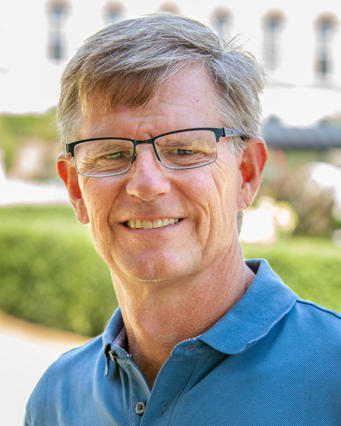 Daniel Phaneuf is the Henry Taylor Professor of Agricultural Economics at the University of Wisconsin where he specializes in methods and applications of nonmarket valuation methods including a focus on recreation demand and hedonic methods. Dan is the coauthor of the leading graduate text in environmental economics “A Course in Environmental Economics: Theory, Course, and Practice,” past editor of the Journal of Environmental Economics and Management and of the Journal of the Association of Environmental and Resource Economists, and currently serves in that capacity for Land Economics. He has published 90 articles in his specialty. His current work revolves around valuing water quality improvements. Daniel Phaneuf is the Henry Taylor Professor of Agricultural Economics at the University of Wisconsin where he specializes in methods and applications of nonmarket valuation methods including a focus on recreation demand and hedonic methods. Dan is the coauthor of the leading graduate text in environmental economics “A Course in Environmental Economics: Theory, Course, and Practice,” past editor of the Journal of Environmental Economics and Management and of the Journal of the Association of Environmental and Resource Economists, and currently serves in that capacity for Land Economics. He has published 90 articles in his specialty. His current work revolves around valuing water quality improvements.
 Christian Vossler is the J. Fred Holly Chair of Excellence in the Department of Economics, Haslam College of Business, at the University of Tennessee. He is the director of the Master's program in Economics, and the director of the UT Experimental Economics Laboratory. He is a fellow of The Baker School of Public Policy and Public Affairs, and a fellow of The Teton Group. He currently serves as a co-editor for the Journal of the Association of Environmental and Resource Economists (JAERE) and Environmental & Resource Economics (ERE), and is an officer of the Association of Environmental and Resource Economists. Christian Vossler is the J. Fred Holly Chair of Excellence in the Department of Economics, Haslam College of Business, at the University of Tennessee. He is the director of the Master's program in Economics, and the director of the UT Experimental Economics Laboratory. He is a fellow of The Baker School of Public Policy and Public Affairs, and a fellow of The Teton Group. He currently serves as a co-editor for the Journal of the Association of Environmental and Resource Economists (JAERE) and Environmental & Resource Economics (ERE), and is an officer of the Association of Environmental and Resource Economists.
Dr. Vossler is an applied microeconomist whose research primarily focuses on environmental and public economics issues. Much of his research has centered on non-market valuation methods used to estimate the benefits of environmental and other public goods in monetary terms, with special attention to issues of mechanism design and the external validity of survey-based methods. Other research areas include the development and testing of pollution control instruments and mechanisms to motivate regulatory compliance, and the interaction between social preferences and public goods provision.
Vossler currently teaches courses in econometrics, environmental economics and experimental/behavioral economics. He joined the faculty in 2003, after receiving his Ph.D. from Cornell University. He has a B.S. in Environmental and Resource Sciences from the University of Nevada and an M.S. in Agricultural and Resource Economics from Oregon State University.
 Nicolai Kuminoff is an Associate Professor in the Department of Economics at Arizona State University, a Research Associate at the National Bureau of Economic Research, and a past Editor of the Journal of the Association of Environmental and Resource Economists. His research in nonmarket valuation focuses on estimating demand for public goods, environmental amenities, and mortality risk reduction using consumer sorting behavior and hedonic price functions in housing, labor, and health care markets. Nicolai Kuminoff is an Associate Professor in the Department of Economics at Arizona State University, a Research Associate at the National Bureau of Economic Research, and a past Editor of the Journal of the Association of Environmental and Resource Economists. His research in nonmarket valuation focuses on estimating demand for public goods, environmental amenities, and mortality risk reduction using consumer sorting behavior and hedonic price functions in housing, labor, and health care markets.
 Vic AdamowiczVic Adamowicz is a Distinguished University Professor Emeritus in the Department of Resource Economics and Environmental Sociology, Faculty of Agricultural, Life & Environmental Sciences, University of Alberta. His research has focused on the economic valuation of environmental amenities and ecosystem services and the incorporation of environmental values into economic analysis – with applications to outdoor recreation, health, water quality, air quality, endangered species, forests, and agriculture. Vic AdamowiczVic Adamowicz is a Distinguished University Professor Emeritus in the Department of Resource Economics and Environmental Sociology, Faculty of Agricultural, Life & Environmental Sciences, University of Alberta. His research has focused on the economic valuation of environmental amenities and ecosystem services and the incorporation of environmental values into economic analysis – with applications to outdoor recreation, health, water quality, air quality, endangered species, forests, and agriculture.
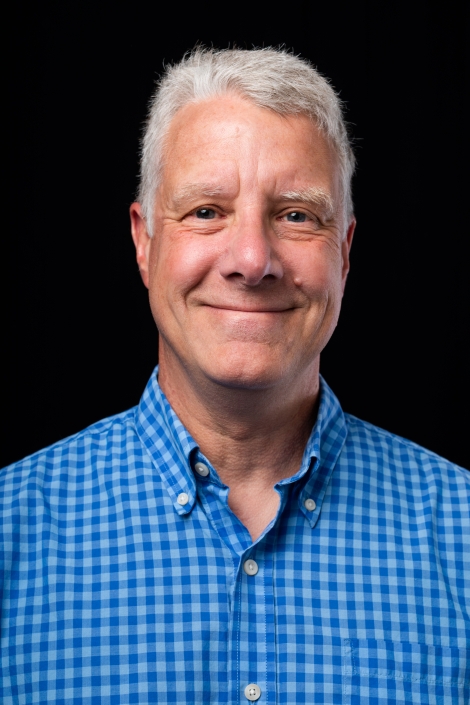 John Whitehead is a Professor in the Department of Economics at Appalachian State University and received his PhD in Economics from the University of Kentucky. His teaching includes courses in environmental and natural resource economics and benefit-cost analysis. His research focuses on nonmarket valuation, particularly in the areas of recreation, water quality, and sports. He is currently the Treasurer for the Society for Benefit-Cost Analysis. John Whitehead is a Professor in the Department of Economics at Appalachian State University and received his PhD in Economics from the University of Kentucky. His teaching includes courses in environmental and natural resource economics and benefit-cost analysis. His research focuses on nonmarket valuation, particularly in the areas of recreation, water quality, and sports. He is currently the Treasurer for the Society for Benefit-Cost Analysis.
 Catherine Louise Kling is a Tisch University Professor in the Dyson School of Applied Economics and Management and Faculty Director at the Atkinson Center for a Sustainable Future. She was elected to the National Academy of Sciences in 2015. She has published nearly 100 refereed journal articles and book chapters and is the former Editor of the Review of Environmental Economics and Policy. Her research specializes in the economic valuation of ecosystem services and integrated assessment modeling for water quality. Catherine Louise Kling is a Tisch University Professor in the Dyson School of Applied Economics and Management and Faculty Director at the Atkinson Center for a Sustainable Future. She was elected to the National Academy of Sciences in 2015. She has published nearly 100 refereed journal articles and book chapters and is the former Editor of the Review of Environmental Economics and Policy. Her research specializes in the economic valuation of ecosystem services and integrated assessment modeling for water quality.
|