Social Discounting
SBCA Professional Development Workshop
September 9 & 10, 2026 | 10:00 a.m. - 1:30 p.m. ET
This workshop introduces the concept of social discounting and explains how it is applied in practice internationally. It assumes no prior knowledge, starting from first principles and progressing to more advanced concepts including the difference between consumption and utility discount rates, declining discount rates, certainty-equivalent net benefits, the Ramsey Rule, and the distinction between normative and positive approaches to social discounting.
These issues lie at the forefront of current policy debates about how time and risk should be incorporated into the economic analysis of public sector spending and regulation. The U.S. Office of Management and Budget recently updated its guidance on benefit-cost analysis of regulations (Circular A-4) and grants (Circular A-94). In the United Kingdom, HM Treasury released a revised version of its Green Book in 2022. Related guidance has also been updated in Germany (2018), the Netherlands (2020), Peru (2021) and many other countries. Adding particular timeliness to this workshop, two of its instructors — Mark Freeman and Ben Groom — have been appointed by the Chief Secretary to the Treasury to lead an independent review of the Green Book discount rate, with their findings due to be published by the end of June 2026.
The course is divided into four sections. The first section will introduce net present value (NPV) analysis, explain the role of social discount rates, and describe a range of policy areas where these have been applied by governments. The second section will focus on core elements of the previous and new versions of Circular A-4, including the relation between social and market discount rates. The third section will introduce some of the more sophisticated issues that have been introduced as part of the development of that guidance. The final session will discuss social discounting outside the US, concentrating on Europe and providing an overview across low- and middle-income countries. By the end of the workshop, participants will have a grounding in both the concepts of social discounting and its practical application.
Instructors
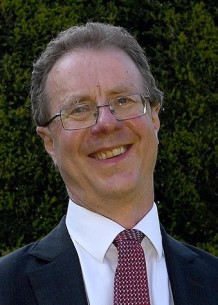 Mark Freeman (organizer) is Professor of Finance and an Associate Dean of the Faculty of Social Sciences at the University of York, UK, where he was previously Dean of the Management School. He has worked for the City of London and in industry, specializing in intergenerational benefit-cost analysis and long-term social discounting. In addition to publishing in leading journals, he has worked with a range of international organizations on the conduct of benefit-cost analysis, including the Financial Conduct Authority, HM Treasury, and the Office for National Statistics in the UK. Mark Freeman (organizer) is Professor of Finance and an Associate Dean of the Faculty of Social Sciences at the University of York, UK, where he was previously Dean of the Management School. He has worked for the City of London and in industry, specializing in intergenerational benefit-cost analysis and long-term social discounting. In addition to publishing in leading journals, he has worked with a range of international organizations on the conduct of benefit-cost analysis, including the Financial Conduct Authority, HM Treasury, and the Office for National Statistics in the UK.
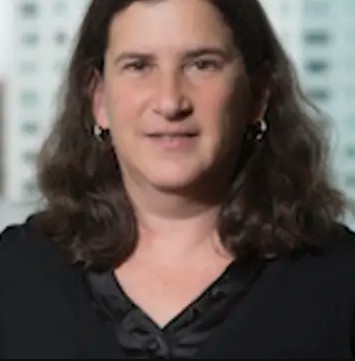 Deborah Lucas is the Sloan Distinguished Professor of Finance at the MIT Sloan School of Management and Director of the MIT Golub Center for Finance and Policy. Previous appointments include acting as associate director at the U.S. Congressional Budget Office, member of the Social Security Technical Advisory Panel, and senior staff economist for the US Council of Economic Advisers. She is an authority on the insights that financial economics can provide to public sector discounting. Deborah Lucas is the Sloan Distinguished Professor of Finance at the MIT Sloan School of Management and Director of the MIT Golub Center for Finance and Policy. Previous appointments include acting as associate director at the U.S. Congressional Budget Office, member of the Social Security Technical Advisory Panel, and senior staff economist for the US Council of Economic Advisers. She is an authority on the insights that financial economics can provide to public sector discounting.
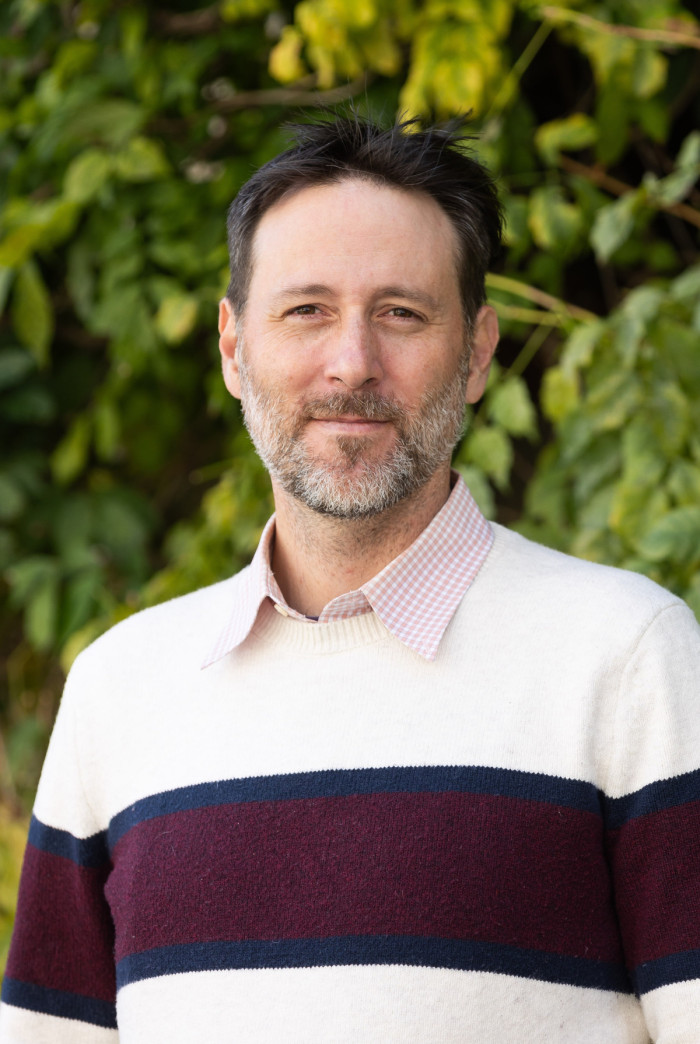 Peter Howard is the economics director at Policy Integrity at New York University School of Law. He is the lead researcher for the Cost of Carbon Pollution Project, a collaboration with the Environmental Defense Fund and the Natural Resource Defense Council. His 2022 Yale Journal on Regulation paper explains advancements in discount rate theory to the legal community and discusses its implications. He also recently authored a letter, published in Science and co-signed by many international experts on social discounting, which commented on the proposed changes to Circular A-4 and Circular A-94. Peter Howard is the economics director at Policy Integrity at New York University School of Law. He is the lead researcher for the Cost of Carbon Pollution Project, a collaboration with the Environmental Defense Fund and the Natural Resource Defense Council. His 2022 Yale Journal on Regulation paper explains advancements in discount rate theory to the legal community and discusses its implications. He also recently authored a letter, published in Science and co-signed by many international experts on social discounting, which commented on the proposed changes to Circular A-4 and Circular A-94.

Ben Groom is the Dragon Capital Chair in Biodiversity Economics at the University of Exeter, UK. He is a member of HM Treasury's Biodiversity Working Group which is tasked with looking at how to take biodiversity into account in benefit-cost analyses of public policy and investment. In addition to publishing in Nature, Science, the American Economic Review and other leading journals, he has worked extensively on benefit-cost analysis issues with policy makers in the United States, including the Council of Economic Advisers and the Environmental Protection Agency, as well as many international governmental bodies.
 Moritz Drupp is Professor of Sustainability Economics at the Department of Economics at the University of Hamburg, Germany. He is also a member of the Cluster of Excellence "Climate, Climatic Change, and Society" and the Center for Earth System Research and Sustainability. His research focuses on the design and evaluation of public policies, particularly those relating to climate change, air and water quality, health, and biodiversity, with a special focus on distributional issues. His research has informed discounting practice and public policy guidance in Germany, the Netherlands, the United Kingdom, the United States and elsewhere. Moritz Drupp is Professor of Sustainability Economics at the Department of Economics at the University of Hamburg, Germany. He is also a member of the Cluster of Excellence "Climate, Climatic Change, and Society" and the Center for Earth System Research and Sustainability. His research focuses on the design and evaluation of public policies, particularly those relating to climate change, air and water quality, health, and biodiversity, with a special focus on distributional issues. His research has informed discounting practice and public policy guidance in Germany, the Netherlands, the United Kingdom, the United States and elsewhere.
|